"Not everyone has to be a DJ or producer to make a difference": meet the woman connecting Japan's hardstyle scene to the world
She does not DJ and she does not produce. She books the artists, files the visas, runs the tours, and introduces Japanese DJs to the world. Oriental Hardstyle Baby on the work that happens behind the music.
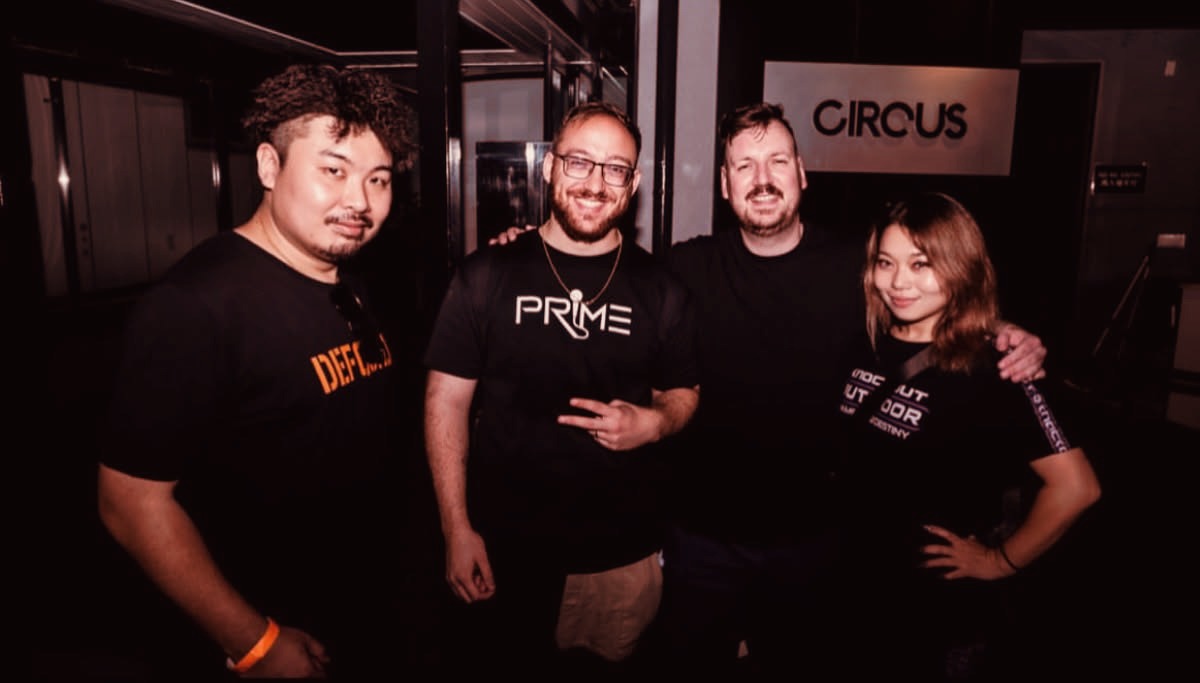
Maria
If you have been to a hardstyle show in Japan in the last couple of years, there is a good chance it happened partly because of her. You just did not see her, because she was not on the stage. She was backstage, or sorting out the visas and the flights, or on a call with an agency overseas.
She goes by Oriental Hardstyle Baby now, though for a long time she was just Maria. And the first thing she will tell you is that she is not an artist.
"No, I don't DJ or produce music. I'm not particularly musically or artistically talented in that way, but fortunately, I think I'm pretty good at the business side of things! Not everyone has to be a DJ or producer to make a difference. Artists need people who can connect them with opportunities, promote their work, and help create the environment in which they can perform. That's where I feel I can be useful, and it's the side of the scene I'm genuinely passionate about."
Why she got involved
The turn from fan to insider came through one night out, and one person.
"My transition from being a fan to getting involved in the scene happened when a childhood friend took me to a hardstyle event here. That's where I met Herald, and I immediately became a fan of what he was doing. As I got to know him better, I developed a huge amount of respect for how he had built the hardstyle scene in Japan, how much he cared about the community, and how committed he was to growing it. At some point, he asked me to help out, and things gradually developed from there."
She is not trying to be a promoter with her own brand. She is trying to help the whole scene grow, in Herald's direction.
"I really believe in Herald's vision of growing hardstyle in Japan, so I want to contribute in whatever way I can."
What the work actually is
Most people know her as the person who brings international artists to Japan. That is the visible part, and it is a small part.
"A big part of my work is building relationships internationally. I travel to countries like the Netherlands and Australia to network with artists, promoters, agencies, and festival organisers. I want people to recognise that Japan has a hardstyle scene, that there is a genuine audience here, and that there is potential for the scene to grow."
Once a show is on, the real work begins, and most of it is the kind nobody sees.
"I do the usual event-promoting work, such as booking venues and negotiating performance fees, but I also handle artist visa applications and all the necessary paperwork. I coordinate flights, accommodation, and communication with agencies, and when artists arrive in Japan, I often take on tour management, artist relations, and hospitality responsibilities to make sure everything runs smoothly."
It runs both ways. She brings artists in, and she also pushes Japanese DJs out.
"I also receive enquiries from international artists and agencies looking for opportunities in Japan. When I can, I connect them with local promoters and clubs who might be a good fit. On the other side, I actively promote Japanese DJs to international promoters, labels, and agencies to help them find opportunities to perform overseas. So, in many ways, I'm a middleman connecting people and opportunities across the two scenes."
What keeps her going
This year, that work added up to something she is proud of: Japan had hardstyle artists performing every single month.
"A few years ago, that would have been difficult to imagine. Now, we're fortunate enough to have that kind of consistency, and I think it shows how much the scene has grown."
It has also been a hard year, and she is honest about that.
"The amount of communication, coordination, and paperwork required to make these shows happen is honestly crazy. There are also challenges and negative reactions along the way, so it's been a bit of a love-hate relationship this year. There have been plenty of moments when I've thought, 'Maybe I should just quit.'"
Then she goes to a show, and the room answers the question for her.
"But then I go to an event and see the crowd enjoying themselves. Seeing people kickroll, klaplong, get excited, and sometimes even tear up while watching their favourite artists perform makes everything feel worthwhile. Those moments remind me why I started doing this in the first place, and I end up taking back all those times I've said I wanted to quit."
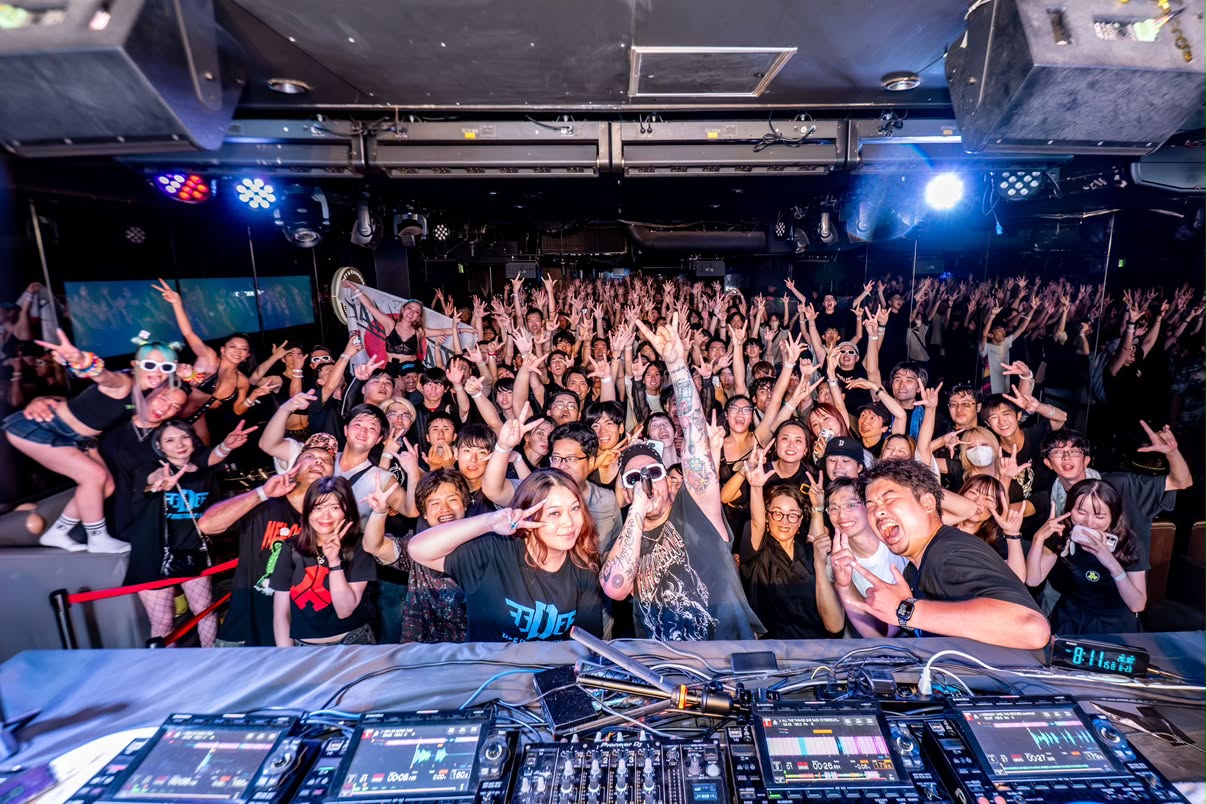
Maria
She puts her own time and energy into it, and those moments are what she gets in return.
"At this point, it feels almost like charity work! I'm not obliged to do any of this, but seeing how happy the music makes people is incredibly fulfilling. That's what keeps me going."
Standing out when you do not fit the picture
Hardstyle is a male-dominated scene, in Japan and everywhere else. Maria is an Asian woman who is not a DJ, and she has felt what that means in a room.
"I remember being invited to Decibel a couple of years ago and spending time in the artist lounge. Imagine a room full of two-metre-tall European men networking and speaking Dutch. As an Asian woman, I already stood out, and I felt like people made assumptions about me before I even had the chance to introduce myself. Some might assume you're someone's girlfriend or that you can't speak English, rather than seeing you as someone who is there to work and build connections."
She was out of place and knew it. She also knew the chance might not come again.
"I felt completely out of place and was honestly very awkward at first. But I also knew I had no idea how many more opportunities I'd get to be at Decibel in that position, sharing the same space with so many A-list artists. So I gathered my courage and started approaching people, introducing myself and telling them about the hardstyle scene in Japan."
That decision is a big part of why the connections exist at all.
"Looking back, I'm glad I did that, because now there are many people who recognise me when I go to Europe and other countries. Those relationships have become incredibly valuable."
The feeling has not fully gone away, and she has made her peace with it.
"I'm a woman, I'm Asian, and I'm not a DJ or producer. I don't necessarily fit the image people might have of someone working in this industry. But I've come to realise that being a different gender or coming from a different background doesn't make love for the music any less genuine. I might contribute differently from the artists themselves, but that doesn't make my contribution any less meaningful. I think the important thing is to keep showing up, building relationships, and letting people see what you can actually do rather than worrying about whether you fit the mould."
One scene, not one party
For all the work she puts into the shows she brings over, she does not want people thinking about her events in particular. She wants them thinking about the music.
"Honestly, I don't want people to think of it as my party or my event. I just want people to go to hardstyle events in general. We're still a very small, niche community... That's exactly why I'm so grateful to every single person who spends their money to come to an event and support the scene. And I don't just mean events featuring international artists. Local events matter just as much."
Her view of the scene is simple: it is small, so the people in it should look after each other.
"Every DJ, every promoter, and every person who comes to these parties contributes to the community, and I think we should cherish that. We're not a huge scene, so I believe we should support one another, share the love, and work together to grow it. Because if the scene grows, we can bring in even more artists, create bigger events, and give people more opportunities to experience something exciting."
What she wants, in the end, is simple: a room full of people feeling the same thing at the same time.
"What I want most is for people to share those euphoric moments together, enjoying the same music, melodies, and kicks. It doesn't matter who organised the event or who's on the lineup. What matters is that we're all there because we love the same music."
And because she knows how she can come across, she will say the plain version too.
"Because I'm not a DJ or producer, and I don't necessarily like being in the spotlight, I know I can come across as a bit of a mysterious person... But if there's one thing I'd want people to understand, it's that I genuinely love hardstyle. I love the music, I love the community, and I want to share that love with as many people as possible. I'm not doing this for recognition or financial gain."
"At the end of the day, I just want to see more people enjoying hardstyle, both in Japan and around the world."